
No, applying sunscreen does not cause vitamin D deficiency in real-world conditions. People rarely apply enough sunscreen to block 100% of UVB rays, and incidental daily sun exposure on uncovered skin produces sufficient vitamin D. India’s widespread deficiency stems from melanin, indoor lifestyles, pollution and diet — not SPF.
You finish your morning skincare ritual, smooth on your sunscreen, and step out. Two hours later, your aunt forwards a WhatsApp post: “Sunscreen blocks vitamin D. That’s why everyone is deficient!” If that single message has ever made you skip your SPF, this blog is for you.
Here’s the truth before we even begin: vitamin D deficiency in India is real and serious. Studies estimate that 70–90% of Indians have insufficient or deficient vitamin D levels, regardless of how much sunshine the country gets. But before you blame your sunscreen tube, let’s understand what dermatology, endocrinology and decades of research actually say.
Where the myth comes from
The theory has a kernel of biological logic. Your skin makes vitamin D when UVB radiation (specifically 290–315 nm) hits a cholesterol-based molecule in the epidermis and converts it into pre-vitamin D3, which the body then activates through the liver and kidneys.
Broad-spectrum sunscreens are designed to filter UVB. So in theory, blocking UVB should block vitamin D synthesis. That logic gets passed around as gospel.
But theory and real-world skin behaviour rarely match.
What the science actually shows
A landmark 2019 systematic review published in the British Journal of Dermatology analysed dozens of studies on sunscreen use and vitamin D status. The conclusion? Real-world sunscreen use does not cause clinically meaningful vitamin D deficiency. Even SPF 50, used correctly, allows enough UVB through for normal vitamin D production.
The reasons are surprisingly practical:
1. No one applies enough sunscreen. Lab tests use 2 mg/cm² — the equivalent of a generous shot-glass amount for face plus body. Real humans apply between a quarter and a half of that. Less product = less filtering = more UVB still reaching skin.
2. No SPF blocks 100% of UVB. SPF 30 filters about 97%. SPF 50 filters around 98%. That leaves a meaningful fraction of UVB still triggering vitamin D synthesis.
3. People miss spots. Hairlines, behind the ears, the tops of feet, the back of the neck — these are rarely covered evenly. Each missed patch is a tiny solar panel for vitamin D.
4. Incidental exposure adds up. Walking to the car, hanging laundry, the school run, balcony chai breaks — these unprotected windows are usually more than enough for daily vitamin D needs.
The American Academy of Dermatology and the British Association of Dermatologists agree: people who use sunscreen daily generally maintain healthy vitamin D levels.

So why ARE Indians so deficient?
If sunscreen isn’t the villain, what is? The honest answer involves several factors that have nothing to do with your SPF bottle:
· Melanin is a natural filter. Indian skin tones produce more melanin, which reduces UVB absorption by roughly 50–70% compared to fair skin. We genuinely need slightly more sun time — or smarter supplementation — to make the same amount of vitamin D.
· We live indoors now. Air-conditioned offices, online classes, food delivery, e-commerce — most urban Indians spend 90% of their day under artificial light. UVB does not pass through window glass.
· Pollution scatters UVB. Particulate matter in cities like Delhi, Mumbai and Kolkata absorbs and scatters the same UVB you need. Even on a sunny day, a polluted sky is filtering your vitamin D for you.
· Cultural clothing patterns. Long sleeves, dupattas, full-coverage attire — beautiful, modest, but they cover the very skin that makes vitamin D.
· Vitamin D is rare in our diets. The richest dietary sources — fatty fish like salmon and mackerel, fortified dairy, cod liver oil — aren’t staples in most Indian households. Vegetarians have even fewer options.
In short: India’s vitamin D deficiency is a lifestyle and geography story, not a sunscreen story.
The real cost of skipping sunscreen
While the WhatsApp post warns about one (mostly imaginary) risk, skipping SPF creates very real ones. Daily, unprotected UV exposure is the leading cause of:
· Premature ageing (fine lines, sagging, loss of elasticity)
· Hyperpigmentation, melasma and uneven skin tone — concerns that disproportionately affect South Asian skin
· Tanning that takes months to fade
· Photodamage and DNA-level skin changes that increase long-term skin cancer risk
You don’t trade a phantom problem for a tangible one. You wear the sunscreen, and you address the deficiency separately.
What dermatologists actually recommend
A balanced, evidence-based vitamin D strategy looks like this:
· Wear broad-spectrum SPF 50 daily, indoors and out. Yes, even on cloudy days. Yes, even at your work-from-home desk if you face a window.
· Get 10–20 minutes of unprotected morning sunlight, 3–4 times a week, on your arms or legs before 10 am, when UVB is gentler and ageing UVA is lower.
· Eat vitamin D-rich foods. Egg yolks, mushrooms exposed to sunlight, fatty fish, fortified milk and cereals.
· Get tested. A simple 25(OH)D blood test tells you exactly where you stand. If you’re deficient, your doctor will recommend supplementation — typically 1,000–2,000 IU daily for maintenance, higher doses if deficient.
Notice what’s missing from this list? “Stop wearing sunscreen.”
The Deya Care way: protect smart, glow smarter
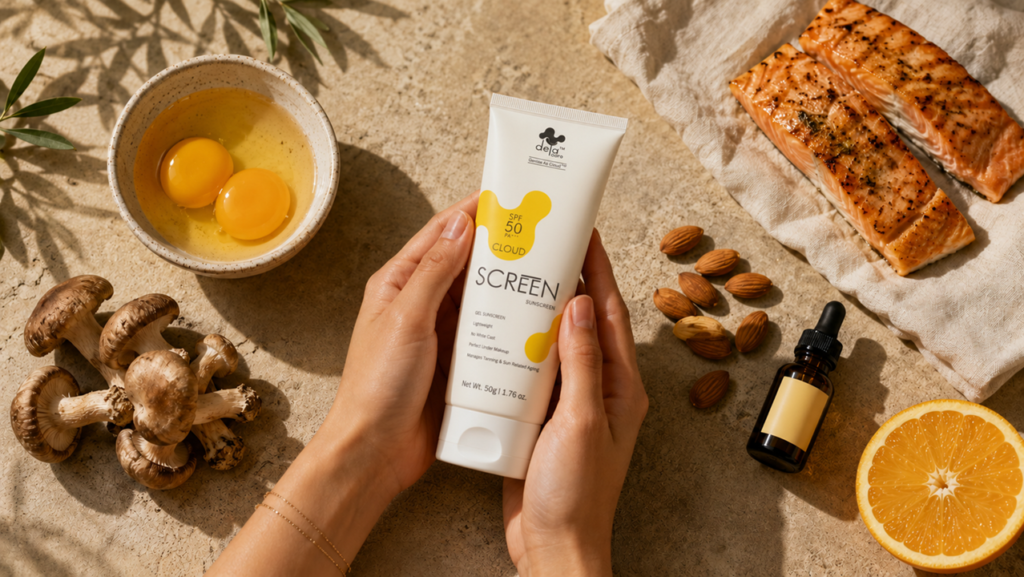
Skincare isn’t either/or. It’s a ritual of small, intentional choices — and your sunscreen is non-negotiable. The trick is choosing one that fits the life you actually live. For everyday hydration, screen time and city commutes → Deya Care Cloud Screen SPF 50 PA++++ A weightless gel formula with new-generation UV filters that protects against UVA, UVB and ageing without the chalk, the white cast or oxybenzone. Hydrating enough to sit under makeup, gentle enough for daily wear. This is your Monday-to-Sunday SPF. For workouts, beach days, peak summer and the school run → Deya Care Sweat Not SPF 50 PA++++ Sports Mineral Sunscreen 100% mineral, water-resistant, sweat-resistant and matt-finish — built for Indian humidity and the days your skin actually moves. Free from oxybenzone and avobenzone, non-comedogenic, and pregnancy-safe. The bottle you reach for when SPF needs to stay put.
Pair either one with a 15-minute morning walk before 10 am and a vitamin D test once a year. That’s the full ritual.
The bottom line
Sunscreen is not stealing your vitamin D. Indoor living, melanin, pollution and diet are. Wear your SPF. Take a walk. Get tested. Supplement if needed. The science is clear, even if the WhatsApp forwards aren’t.
Now please go forward this blog to the aunt in question. With love.