

Walk down any sunscreen aisle in India and the same quiet war plays out: SPF 30 on one bottle, SPF 50 on the next, and a price tag that says the bigger number is worth more of your money. So is it? Does Indian skin — with its melanin, its tropical sun, its tendency to tan before it burns — actually need SPF 50?
Let’s settle this.
What the numbers mean ?
SPF measures protection against UVB rays — the ones that cause sunburn. The number isn’t a percentage, and the scale isn’t linear:
· SPF 30 blocks about 97% of UVB
· SPF 50 blocks about 98% of UVB
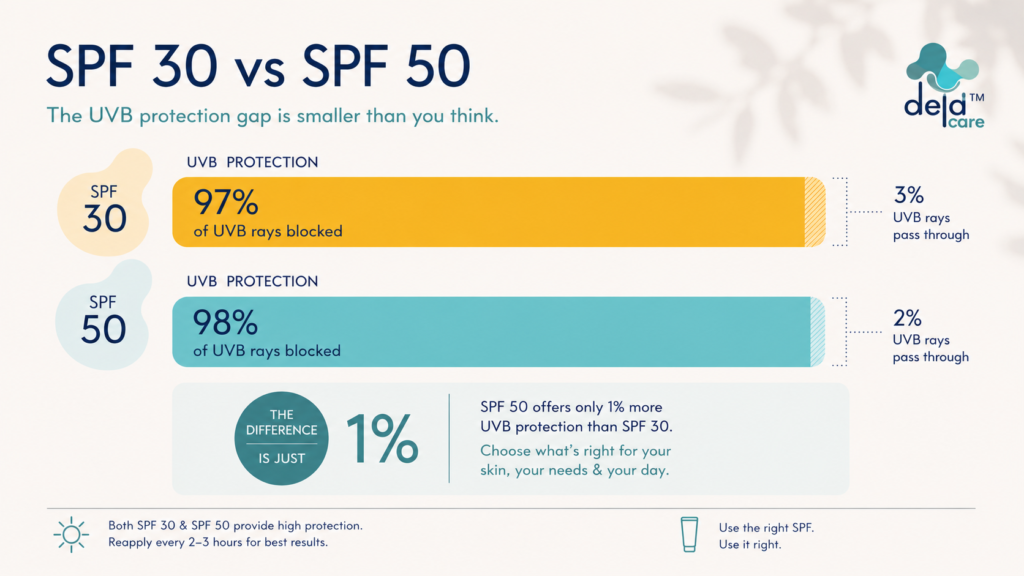
One percentage point. That’s the entire difference on paper. So why does the higher number matter? Because Indian skin isn’t really fighting sunburn in the first place.
Indian skin has a different problem
Most Indian skin sits in the Fitzpatrick IV–VI range. More melanin, more natural sun tolerance, much less risk of the red-and-peeling burn. That’s the good news — and the source of a long-running myth that we don’t need sunscreen.
We do. Just for different reasons.
What actually bothers Indian skin is tanning, dullness, uneven tone, melasma, and post-inflammatory hyperpigmentation — the dark marks that linger after a pimple or an insect bite. And the sun is one of the biggest accelerants of all of them.
The UVA blind spot
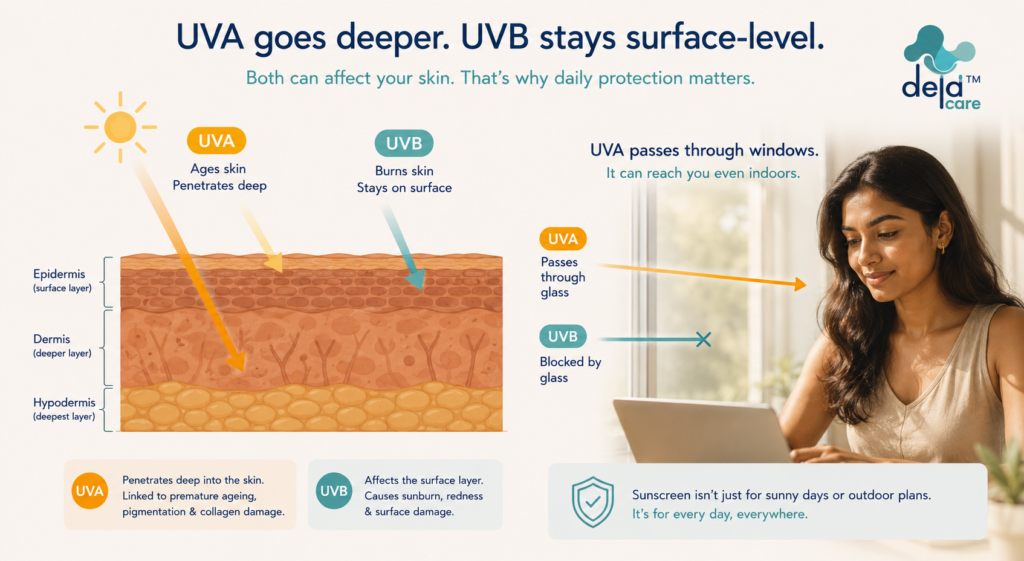
Here’s what the SPF number doesn’t tell you: it only measures UVB. UVA — the rays that drive pigmentation, photoaging, and fine lines — is the other half of the equation, and arguably the more important half for Indian skin.
UVA passes through clouds and window glass, stays consistent year-round, and doesn’t care whether you’re indoors near a sunny window or stuck in traffic. To check UVA protection, look for the PA rating: PA+++ is a realistic minimum for Indian conditions.
An SPF 50 with PA+ is, honestly, less useful for an Indian face than an SPF 30 with PA+++.
Why higher SPF still earns its keep ?
In a lab, sunscreen is tested at 2 mg per square centimetre of skin. In real life, almost no one applies that much. Most people use a quarter to a half of the tested amount — which means the SPF you actually get is far lower than what’s on the bottle.
Apply SPF 30 sparingly and you might get the real-world protection of SPF 8–15. Apply SPF 50 sparingly and you’ll still land around SPF 20–25 — meaningful protection.
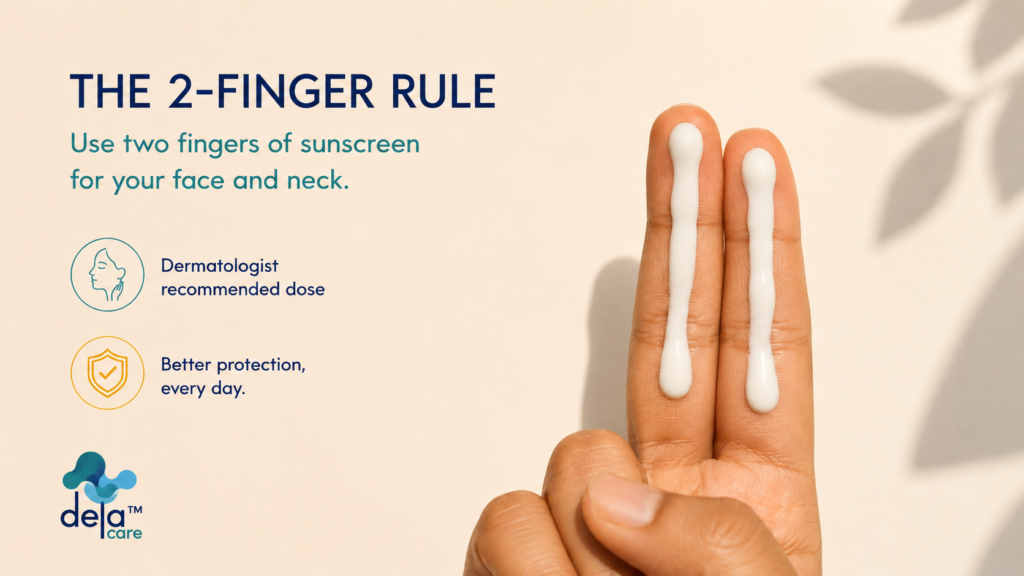
That’s the practical case for SPF 50 in India: it gives you a buffer for human behaviour. Most of us won’t reapply every two hours or measure out two finger-lengths of cream. SPF 50 cushions the gap.
The Verdict
For most Indian faces, on most days, SPF 50 with PA+++ (or higher) is the safer default — not because the extra 1% of UVB is dramatic, but because pigment-prone skin needs the buffer, and India’s UV index doesn’t really take days off.
SPF 30 (with strong PA) is enough if you’re mostly indoors, diligent about reapplying, and not actively treating any pigmentation. For everyone else — commuters, outdoor workers, anyone using actives like retinol or vitamin C, anyone watching melasma or tan creep in — SPF 50 with PA+++ is the smarter choice.
What to look for in your next sunscreen
The SPF number is only the starting point. The sunscreen you’ll actually reach for every morning needs to tick a few more boxes:
· Broad-spectrum protection with a strong PA rating (PA+++ minimum)
· Photostable UV filters that hold up through a full Indian day
· A texture that suits the climate — humidity is a non-negotiable variable here
· Pigment-prone skin support — ingredients that calm, hydrate, and shield rather than irritate
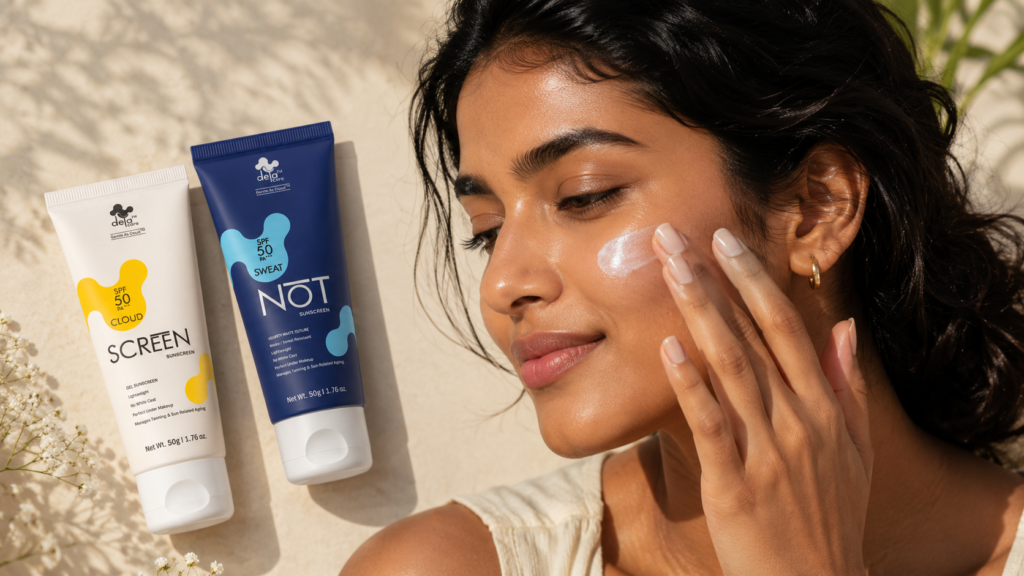
We built the Deya Care sunscreens around exactly these principles — SPF 50, PA+++, and formulas that respect what Indian weather actually puts your skin through.
Two sunscreens, two real-world problems
Cloud Screen SPF 50 PA+++ Broadspectrum Gel Sunscreen — for everyday wear
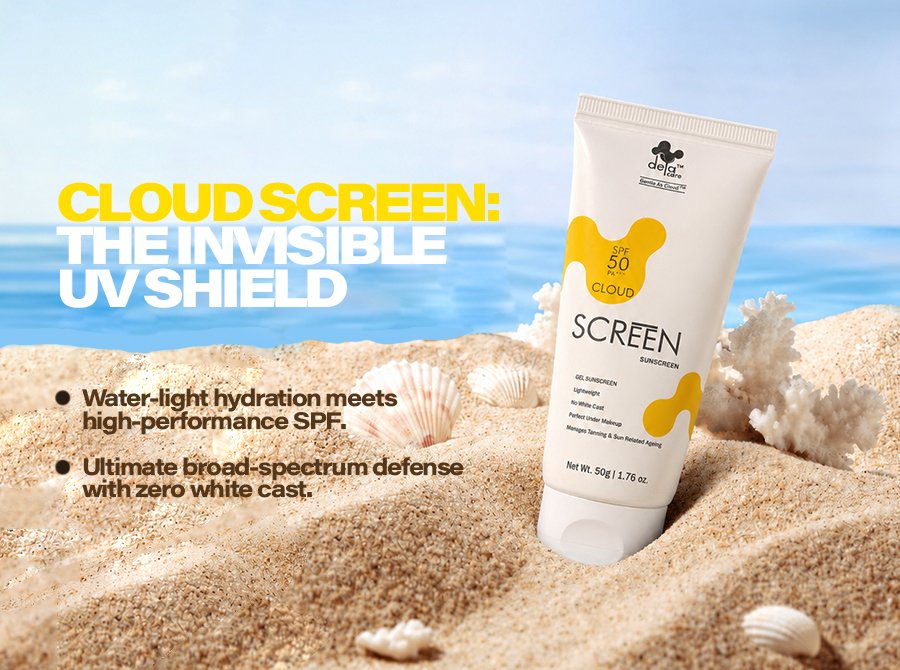
If you want one sunscreen that disappears into your morning routine and keeps up from desk to dinner, Cloud Screen is built for it. It uses Tinosorb S and Tinosorb M — modern photostable filters that hold up under sun and don’t break down through the day — and finishes as a lightweight, hydrating gel with no white cast.
Aloe vera, olive oil, and vitamin E sit alongside the UV filters, so it doubles as a calm, comforting layer for skin that doesn’t want to feel “sunscreened.” Works under makeup, suits most skin types, and on oily-combination skin can stand in for your morning moisturiser.
Best for: daily wear, indoor-outdoor commuters, anyone who wants protection without a heavy finish.
Sweat NOT SPF 50 PA+++ Ultra Matt Mineral Sports Sunscreen —For Active Lifestyle
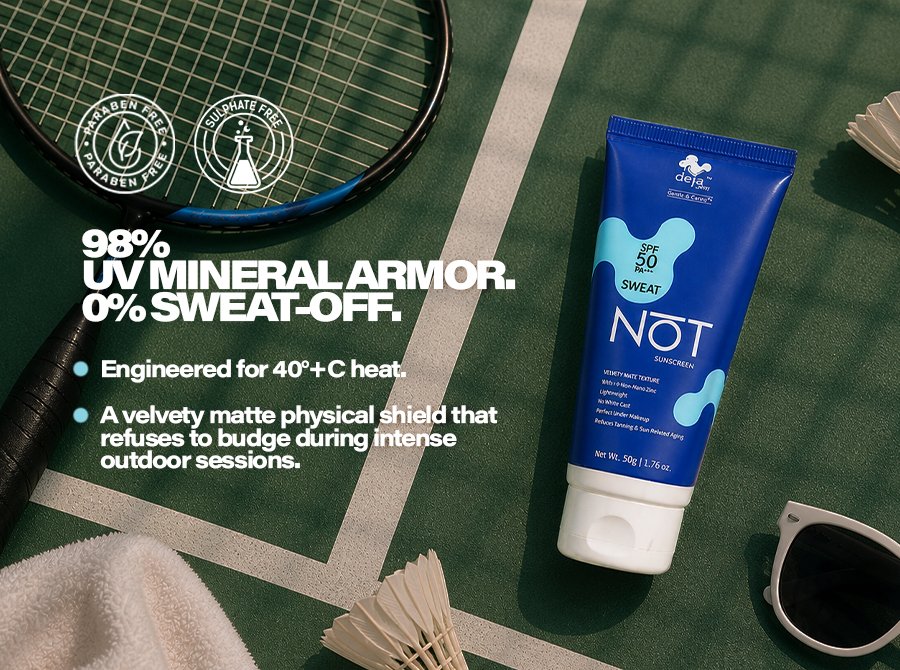
When the day involves humidity, sweat, or any real time outdoors, a hydrating gel isn’t always the right answer. Sweat NOT is the matte, mineral-led counterpart — built around zinc oxide and titanium dioxide with new-age UV filters layered in for broad-spectrum strength.
The result is a sweat-resistant, shine-controlling finish that holds up through Indian summers, workouts, and long days outside, without sliding into your eyes or going chalky on deeper skin tones. Dermatologically tested and gentle enough for sensitive skin.
Best for: oily and combination skin, outdoor commutes, peak summer, beach and travel days.
The bottom line
SPF 50 isn’t a marketing trick, but it isn’t a magic upgrade either. For Indian skin, the most important fight is against UVA — the silent driver of tan, dullness, and pigmentation — and the most important habit is using enough, often enough.
Pick the sunscreen you’ll actually reach for every morning. Make sure the PA rating earns its place. And if you’re going to err on one side of the SPF debate, err on the side of 50 — your skin, a few summers from now, will quietly thank you.

I have used the sunscreen and saw the difference in 3 days. The biggest advantage I felt was that it was covering my skin for 12 hours straight.