
The breakout cleared three weeks ago. The dark brown patch where it used to be? Still there. Maybe a little lighter than last month, but stubbornly visible — especially when the light hits your face from the side.
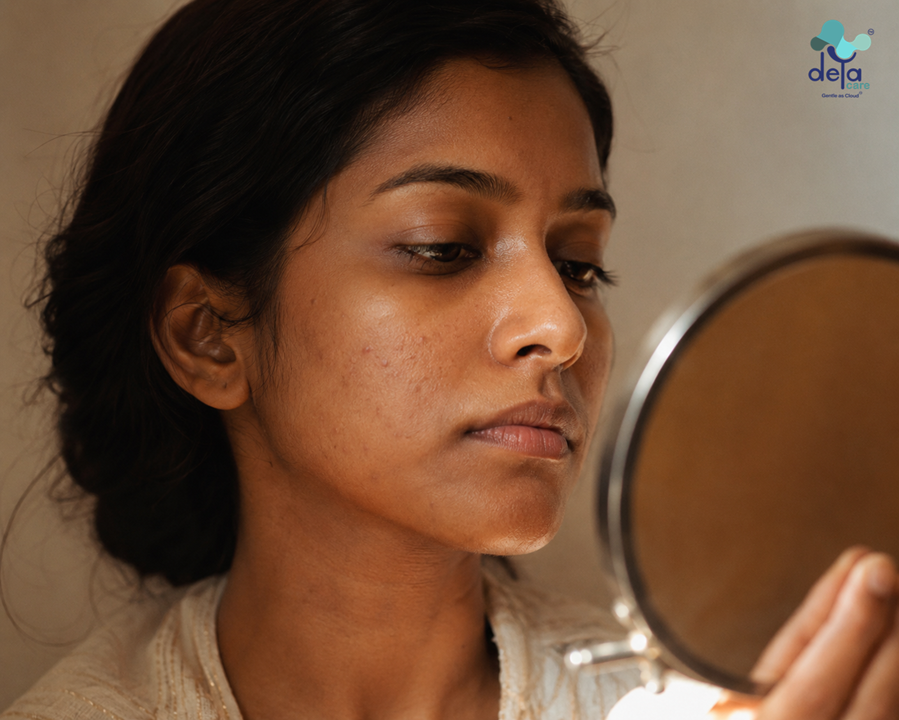
This is the part of acne no one warns you about. The post-inflammatory hyperpigmentation (PIH) that outlasts the actual pimple by *months*. And it’s the single biggest reason “just use a salicylic acid wash” is incomplete advice for Indian skin.
The real fix is two actives working together: **salicylic acid** to clear what’s clogging the pore, and **niacinamide** to fade the mark, calm the inflammation, and stop the next one from leaving a shadow behind. This is exactly how **Deya Care’s Blemish Be Gone** is formulated — both actives, one cleanser, sulfate-free.
Here’s why this combination is the gold standard for melanin-rich skin, and how to actually use it.
## Why your skin needs both, not one
The internet has trained you to think of these as rivals. They’re not. They solve different problems on different timelines, and Indian skin has both problems simultaneously.
**Salicylic acid handles the breakout.** It’s oil-soluble, which is the trait that makes it the gold-standard acne ingredient — it’s the only common acid that can actually dissolve *into* sebum and clear out the pore from the inside. Glycolic acid and lactic acid sit on the surface. Salicylic gets inside.
**Niacinamide handles everything that comes after.** The redness, the inflammation, the dark mark, the weakened barrier — niacinamide works on all of it simultaneously. Most importantly for Indian and other melanin-rich skin: it directly interferes with the way pigment gets transferred to your surface skin cells, which is the mechanism behind PIH.
Use only salicylic acid, and you’ll clear the pimples but watch them leave shadows that linger for months. Use only niacinamide, and you’ll calm inflammation but never actually clear the clogged pore. Use both — and you address the breakout *and* its aftermath in one product.
## What salicylic acid actually does
Four things, mechanistically:
1 **Dissolves keratin plugs** inside the follicle — the literal cause of whiteheads, blackheads, and closed comedones
2 **Reduces sebum volume** sitting inside pores
3 **Calms inflammation** as a salicylate, dampening the cascade that turns a clogged pore into a painful pimple
4 **Mild antimicrobial effect** against *Cutibacterium acnes*, the bacteria implicated in inflammatory acne

In a face wash, 0.5%–2% is the standard range. Well-tolerated by most skin types in a rinse-off format, though mild dryness in the first two weeks is normal as skin adjusts.
## What niacinamide actually does
Five things, simultaneously:
1 **Blocks melanin transfer** — interferes with how pigment moves from the cells that make it (melanocytes) to your surface skin. This is why it’s the most-cited ingredient for fading PIH and melasma.
2 **Builds ceramides** — the lipids that hold your barrier together. Stronger barrier = less water loss, less reactivity.
3 **Regulates sebum** — reduces oil output and visibly minimizes pore appearance.
4 **Calms inflammation** — works on the same redness and reactivity that drives both acne and the marks it leaves.
5 **Antioxidant defense** against pollution and UV stress.
Effective from 2% to 10%, with 5% considered the sweet spot. Pregnancy-safe, tolerated by sensitive skin, almost no contraindications.
## “But don’t they cancel each other out?”
No. This is the most persistent myth in this category.
The fear comes from decades-old worry that niacinamide converts to nicotinic acid (which can cause flushing) when mixed with low-pH actives. Modern formulation science — and a decade of well-formulated combination products — has shown this concern is essentially theoretical, especially in a rinse-off cleanser where contact time is brief.
A well-formulated SA + niacinamide cleanser delivers both actives effectively. The myth survives because it’s repeated. The data doesn’t support it.
## Which Deya Care product is for you
The choice is determined by what’s happening on your skin *right now*, not what you’re worried about long-term.
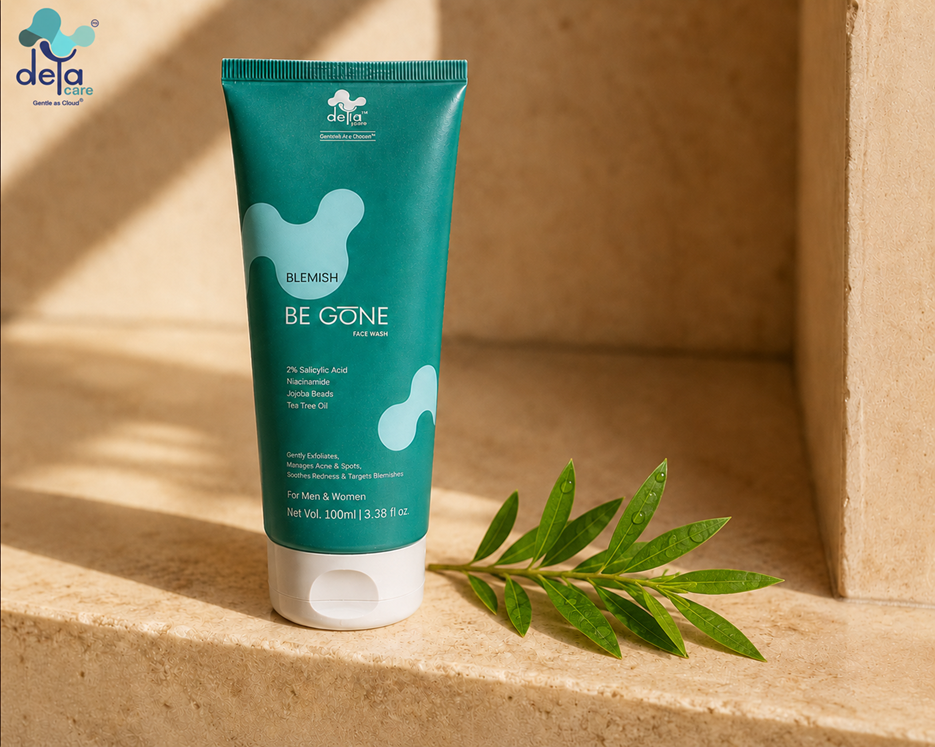
### 🌿 Blemish Be Gone — if you have active breakouts (with or without marks)
This is the dual-action cleanser. Salicylic acid to clear what’s clogging the pore. Niacinamide to calm inflammation, regulate oil, and fade the dark marks left behind by previous breakouts. Built on amino-acid surfactants at skin-compatible pH — no sulfates, no barrier disruption while the actives work.
If you’re dealing with breakouts and the brown marks they leave behind, this is the entry point.
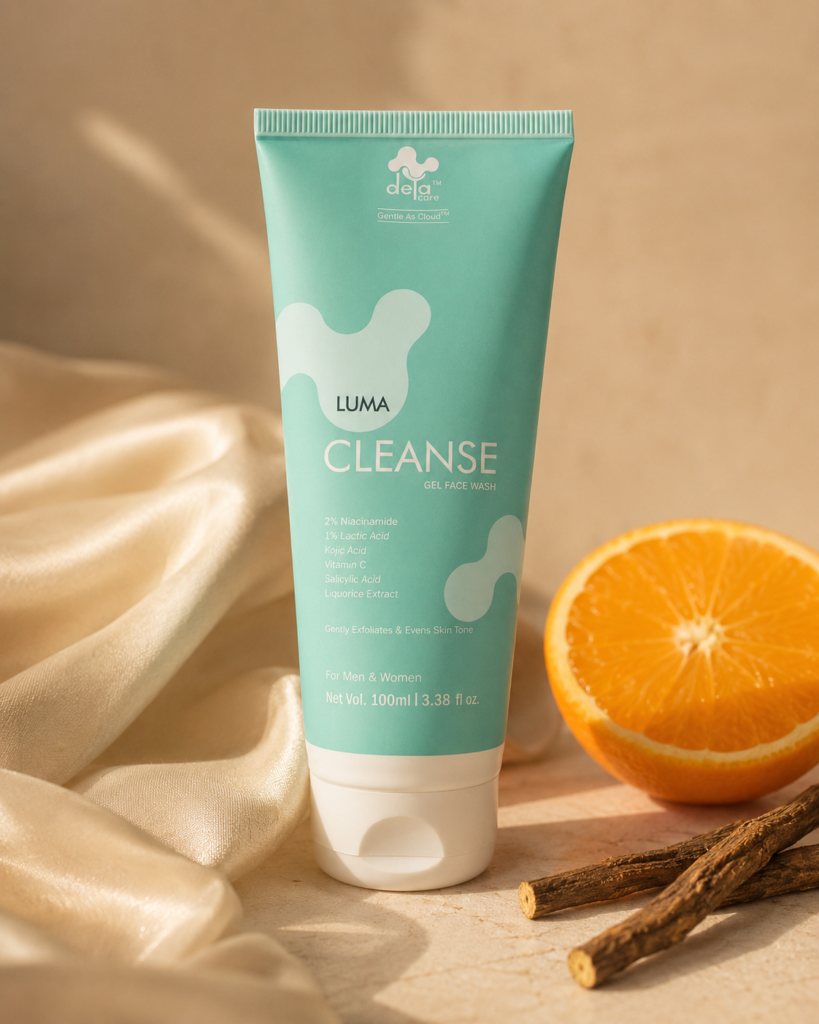
### ✨ Luma Cleanse — if your acne has cleared and pigmentation is the main concern
Niacinamide-forward, no BHA. For skin that’s past the active-breakout stage but is still working on uneven tone, post-acne marks, melasma, or post-summer dullness. Same gentle base, focused on brightening through inflammation control rather than exfoliation.
**The natural journey:** Most customers who come in with active acne start on Blemish Be Gone. As breakouts clear and only the marks remain, they often switch to Luma Cleanse — or alternate between the two as their skin shifts through different phases. Both products are designed to work as a pair across that journey, not against each other.
## How to actually use this
Keep it simple to start:
**Morning:** Cleanser (Blemish Be Gone or Luma Cleanse, based on current concern) → moisturizer → SPF.
**Evening:** Cleanser → moisturizer.
That’s it. If after 4–6 weeks you want to add more — a niacinamide serum for higher concentration, a leave-on BHA toner for persistent congestion — you can. But start with one well-formulated cleanser. Most people overshoot in the opposite direction, layering five products and then wondering why their skin is reactive.
## A few honest questions
**How long until I see results?**
Active breakouts: 2–4 weeks. Dark marks: 6–12 weeks of consistent use. Pigmentation always lags acne — be patient with the marks.
**Can I use a salicylic acid cleanser if I have sensitive skin?**
Often yes, in a rinse-off format with a gentle surfactant base. The barrier disruption people associate with “salicylic acid is too harsh” usually traces to the surfactants in the product, not the SA itself. A well-formulated cleanser like Blemish Be Gone is tolerable for most sensitive skin types — start every other day if uncertain.
**Is salicylic acid safe in pregnancy?**
Topical SA at standard rinse-off concentrations (≤2%) is generally considered safe. Leave-on high-strength SA treatments are typically avoided. Always check with your obstetrician.
**Can I use a niacinamide serum on top of the cleanser?**
Yes. This is one of the most effective stacks in modern skincare. Cleanse, then apply niacinamide serum to clean dry skin, then moisturize.
**Will I get the niacinamide “flushing” thing?**
Almost never with topical, rinse-off products. The flushing reaction is associated with oral nicotinic acid — a related but chemically different compound. A small number of people get mild redness from high-concentration leave-on niacinamide, but this is rare and not associated with cleansers.