
Stop trying to remove your tan. It’s probably not tan
There’s a quiet, expensive Indian skincare loop that most people get caught in: notice darkening on the face → buy a de-tan pack, scrub, or bleach → use it aggressively → see no real change → buy a stronger one → develop irritation → notice the dark patches getting worse → blame yourself, not the product.
The problem isn’t that you’re not trying hard enough. It’s that most of what you’re treating isn’t tan in the first place. And the things that actually work are not what the de-tan aisle is selling.
Here’s the distinction nobody walks you through.
What tan actually is
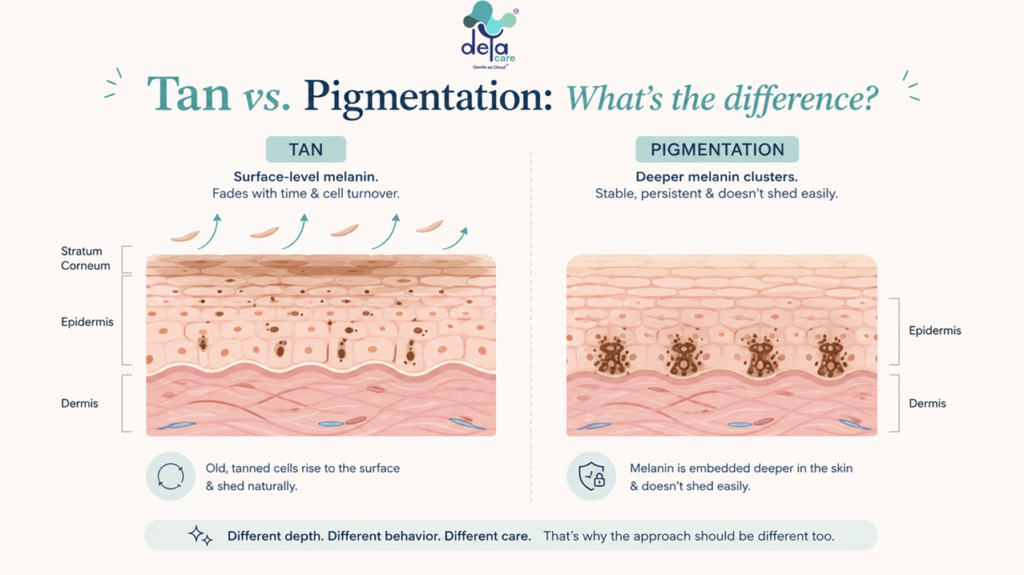
A tan is your skin’s defence mechanism doing exactly what it’s supposed to do.
When UV hits the skin, melanocytes ramp up melanin production to absorb future UV before it damages deeper layers. That increased melanin is what shows up as a tan. It’s temporary, it’s protective, and it fades on its own as the skin sheds — typically over 2–4 weeks, longer for deeper tans.
You can mildly speed this up with gentle chemical exfoliation. You cannot — meaningfully and safely — scrub it away. Stop adding to it, and the skin will fade naturally on its own. That’s the part most de-tan routines never tell you.
What pigmentation actually is
Pigmentation is something else entirely. It’s longer-term changes to melanin production from causes that don’t go away on their own:
· Post-inflammatory hyperpigmentation (PIH) — dark marks left by acne, insect bites, shaving cuts, even small irritations. A defining feature of how acne shows up on Fitzpatrick IV–VI skin.
· Melasma — patchy, hormonal pigmentation triggered by pregnancy, contraceptives, or hormonal fluctuations. Skews female demographically, but men get it too.
· Sun spots and age spots — accumulated UV damage over years, common in commuters, drivers, and anyone with regular outdoor exposure regardless of gender.
This is what most people actually have when they think they have “stubborn tan that won’t go away.” And aggressive de-tan treatments don’t just fail to remove it — they actively make it worse.
Why the de-tan loop fails
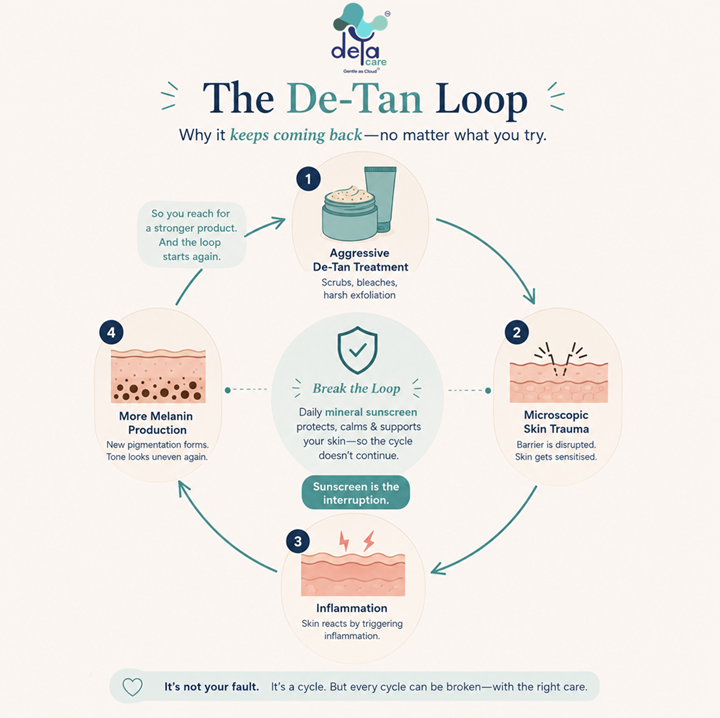
Aggressive scrubbing, bleaching, or strong physical exfoliation causes microscopic skin trauma. Trauma causes inflammation. Inflammation triggers more melanin production. Which means the “treatment” leaves you with new pigmentation on top of the existing concern.
This is why so many Indian skincare journeys end in frustration. The reader who scrubs harder when the dark patches don’t fade is feeding the exact mechanism causing them.

What actually works
For real pigmentation, the menu is unglamorous but well-established:
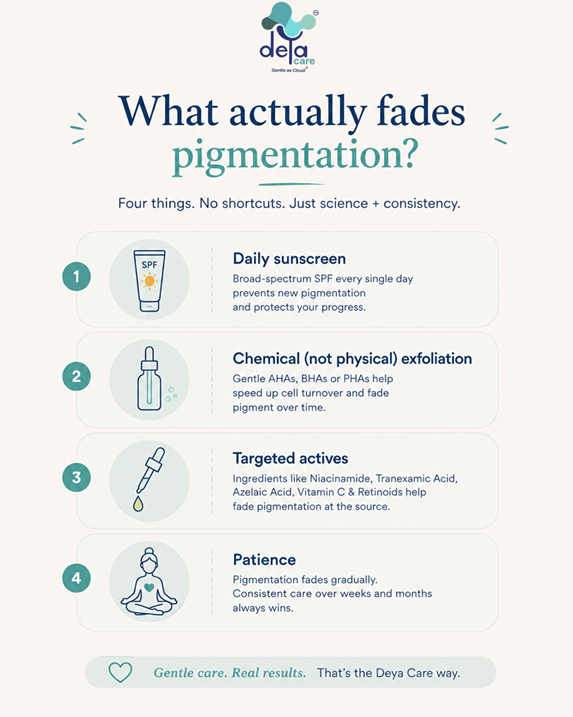
· Daily broad-spectrum sunscreen. Without this, nothing else works. UV continues triggering melanin production, and every active ingredient you layer on is fighting a fresh wave each day.
· Chemical exfoliation, not physical. Gentle AHAs or BHAs over weeks support natural cell turnover without causing the inflammation that scrubs cause.
· Targeted actives, used consistently. Niacinamide, vitamin C, alpha arbutin, tranexamic acid, retinoids. They work — but only with consistent use over months, and only if sunscreen is in place.
· Patience. Real pigmentation fades on a timeline of months, not weeks. Anything promising faster is either lying or causing the harm we just described.
The setup that prevents both
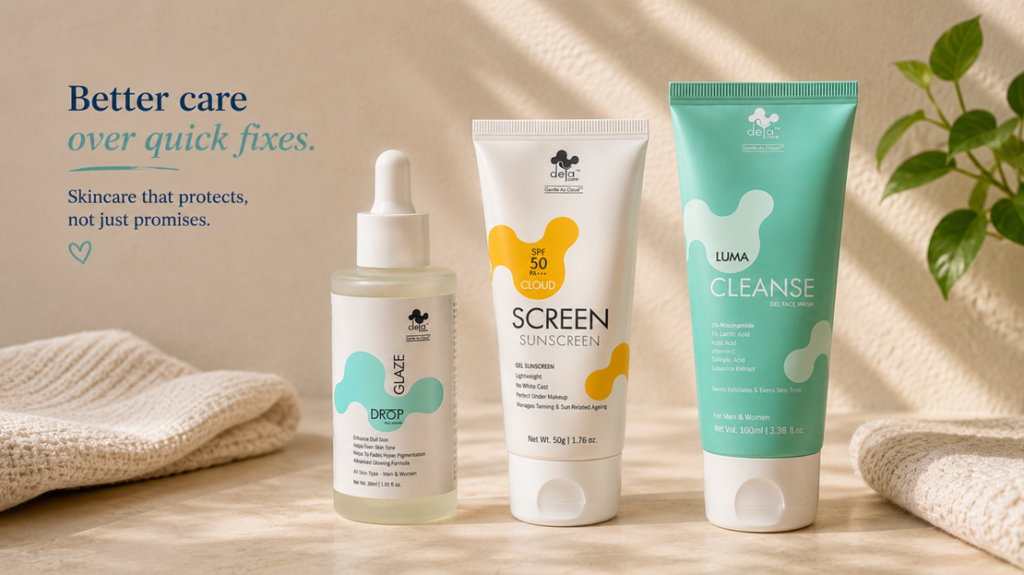
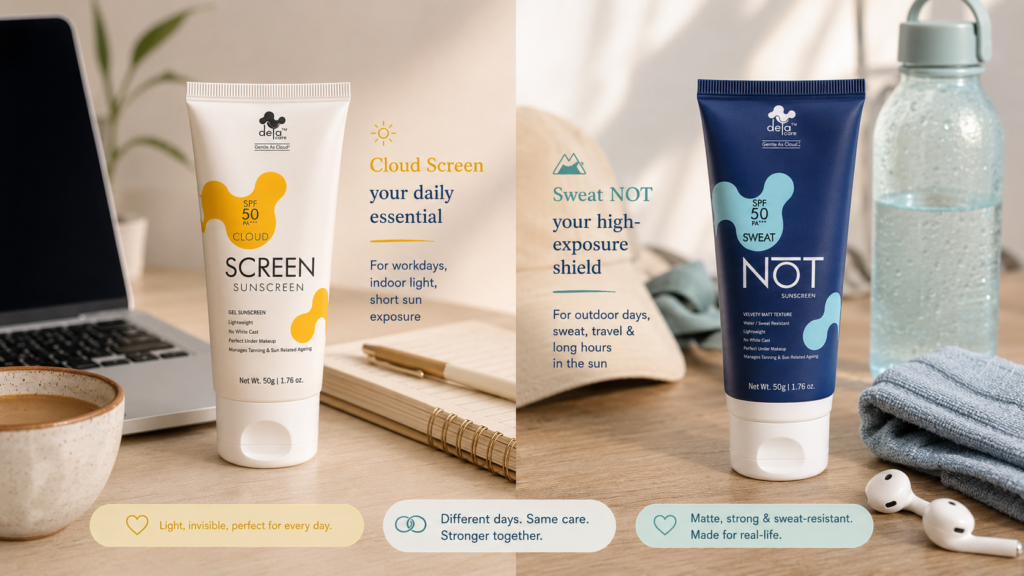
Tan and pigmentation share one cause: UV exposure. Which means they share one fix at the root. For everyday wear — desk days, commutes, indoor exposure — Cloud Screen SPF 50 PA+++ gives you the daily defence that makes every other pigmentation treatment possible. Lightweight gel, photostable Tinosorb filters, layers cleanly under makeup or works clean on bare skin. For high-exposure days — outdoor commutes, weekend sun, sport, driving long stretches — Sweat NOT SPF 50 PA+++ gives you matte mineral protection that holds up through humidity, sweat, and direct sun. The formula doesn’t slide off when you do.
Use both as the situation calls for it. The reader who pairs daily Cloud Screen with high-exposure Sweat NOT is treating UV as the year-round, day-round factor it actually is — and that’s the routine that lets existing pigmentation fade and stops new tan from settling in.
The bottom line
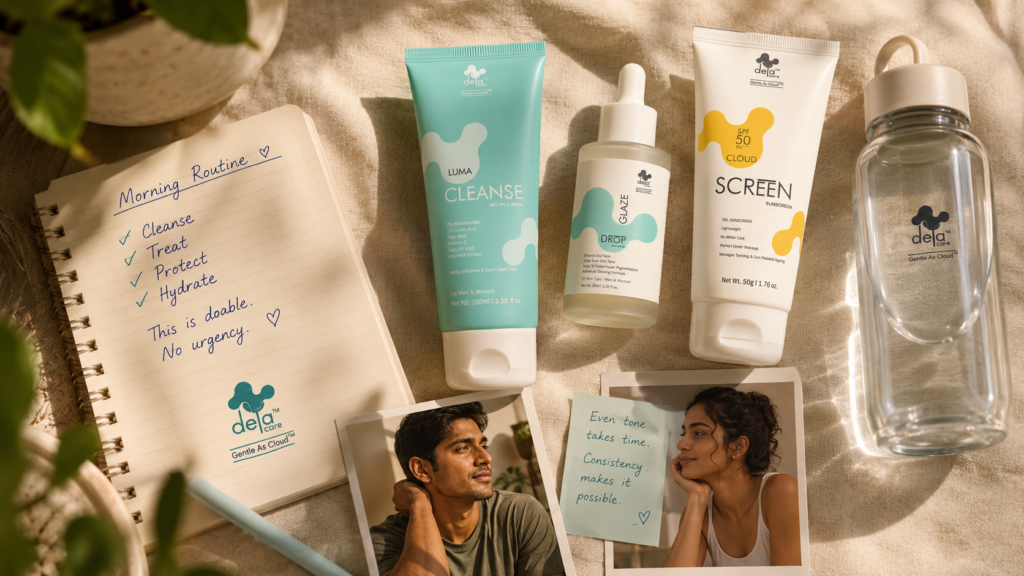
Stop trying to remove your tan. Most of it will fade on its own if you stop adding to it. Whatever stays after that isn’t tan — it’s pigmentation, and the fix is sunscreen plus targeted actives plus patience, not scrubs that make it worse.
The people whose skin tone evens out over years aren’t the ones with the strongest de-tan products. They’re the ones who wore sunscreen every day for long enough to let the loop break.