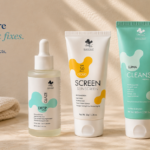


Does Sunscreen Cause Acne?
It’s the accusation that quietly stops more Indian skincare routines than almost any other: “I tried sunscreen, it broke me out, never again.” And honestly, the suspicion isn’t entirely unfounded — sunscreen can trigger breakouts. But it’s almost never the SPF doing it. It’s the formula.
Here’s what’s actually going on, and what to look for instead.
The honest answer
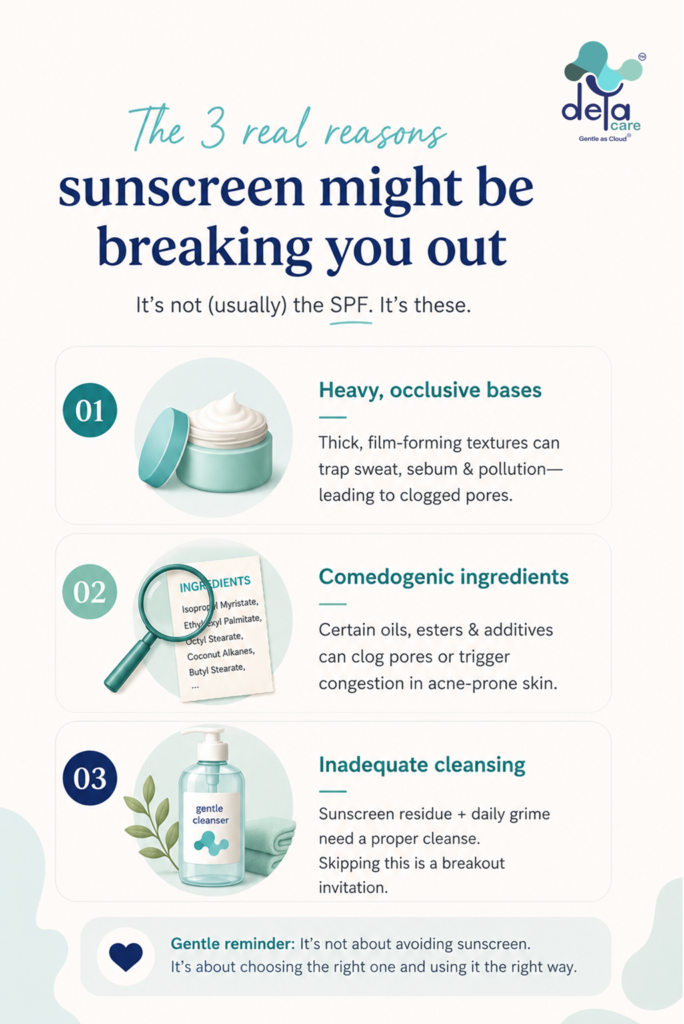
Sunscreen does break some people out. That’s not gaslighting — it’s a real phenomenon. But the cause isn’t UV protection itself. It’s almost always one of three things: a heavy, occlusive base that doesn’t suit oily skin; a comedogenic ingredient hiding in the formula; or poor cleansing at the end of the day.
Once you know what to look for, finding a sunscreen that works with acne-prone skin is genuinely easy.
The three real culprits
1. Heavy, occlusive bases
A lot of sunscreens — especially older drugstore ones and “moisturising” SPFs — use thick, oil-rich bases meant for dry or normal skin. Layered onto oily, acne-prone skin in Indian humidity, they sit on the surface, trap sebum, and turn into a perfect environment for breakouts.
What to avoid: sunscreens described as “rich,” “nourishing,” or “creamy.” That’s marketing language for “occlusive,” and it’s not what oily skin needs.
2. Comedogenic ingredients
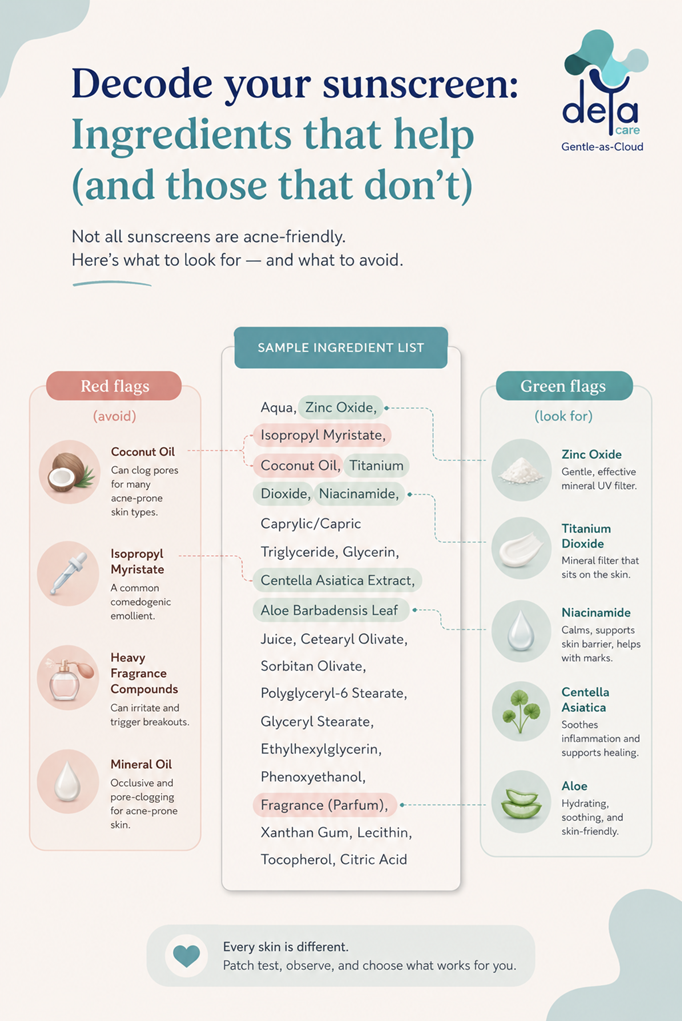
Some ingredients quietly clog pores even in otherwise lightweight formulas. The repeat offenders: coconut oil, isopropyl myristate, certain silicones in high concentrations, and some heavy fragrance compounds.
What to avoid: thick oils high on the ingredient list, strong fragrance, and any formula that doesn’t carry a clear non-comedogenic claim.
3. Inadequate cleansing
This is the one most people miss. Sunscreen — especially water-resistant or sweat-resistant kinds — is designed to stick to skin. A regular face wash often won’t fully remove it, and what gets left behind builds up overnight.
What to do: double-cleanse on days you wear sunscreen. An oil-based or balm cleanser first to break down the SPF, followed by your regular face wash. This single habit fixes more sunscreen-related breakouts than any product change.
Why skipping sunscreen is worse for acne-prone skin
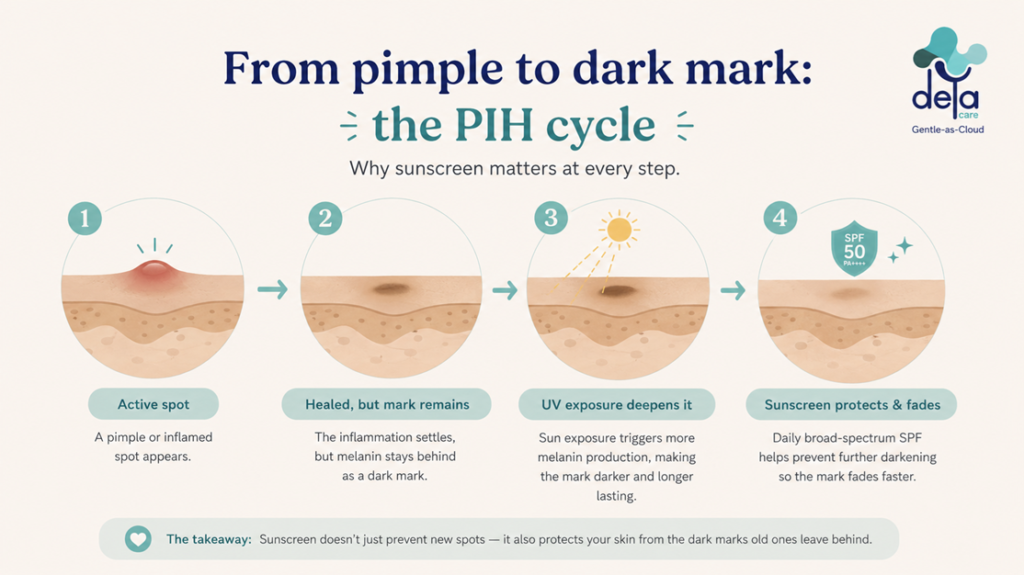
Here’s the part that gets overlooked. For acne-prone Indian skin, skipping sunscreen isn’t a neutral choice — it actively makes things worse.
Every pimple, every insect bite, every minor irritation leaves behind a dark spot. That’s post-inflammatory hyperpigmentation (PIH), and it’s a defining feature of how acne shows up on
Fitzpatrick IV–VI skin. Without sunscreen, those dark marks deepen under UV exposure and take months — sometimes years — to fade.
The reader who quits sunscreen because of one breakout is trading a temporary problem for a long-term one. The acne would have healed in a week. The pigmentation it leaves behind is what stays.
What an acne-friendly sunscreen actually looks like
Five quick filters when you’re scanning a label:
· Non-comedogenic — explicitly stated, not just implied
· Lightweight gel, fluid, or matte texture — not a thick cream
· Mineral or hybrid formulation — zinc oxide is mildly anti-inflammatory and can help calm active breakouts
· No heavy oils high on the ingredient list — coconut, mineral oil, palm derivatives
· Bonus actives — niacinamide (oil control), zinc (calming), and skin-soothing additions like aloe or centella
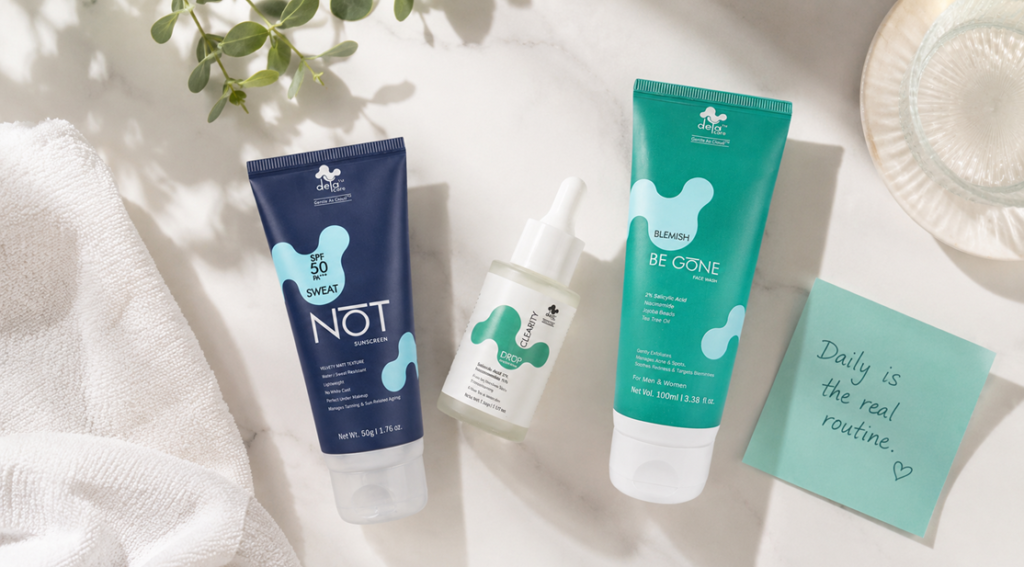
Sweat NOT — built for the skin that broke up with sunscreen Sweat NOT SPF 50 PA+++ Ultra Matt Mineral Sunscreen is built specifically for the reader this post is written for — the one who has tried sunscreen before, broken out, and walked away.
What makes it different:
· Mineral base of zinc oxide and titanium dioxide, with the natural anti-inflammatory benefits zinc brings to active breakouts
· Non-comedogenic and dermatologically tested for sensitive, reactive skin
· Ultra-matte finish that controls oil through Indian humidity rather than trapping it
· Sweat-resistant without leaning on the heavy occlusive ingredients most water-resistant sunscreens rely on
· Free of oxybenzone and heavy fragrance, both of which can irritate acne-prone skin
It’s the formula that lets oily, acne-prone Indian skin protect itself without the trade-off the older sunscreen aisle used to force.
The bottom line
Sunscreen doesn’t cause acne. The wrong sunscreen sometimes does. The fix isn’t to skip SPF — it’s to switch to a formula that works with oily, breakout-prone skin instead of against it, and to wash it off properly at the end of the day.
Skip the sunscreen, and the dark marks from this month’s breakouts will outlast the next ten.