
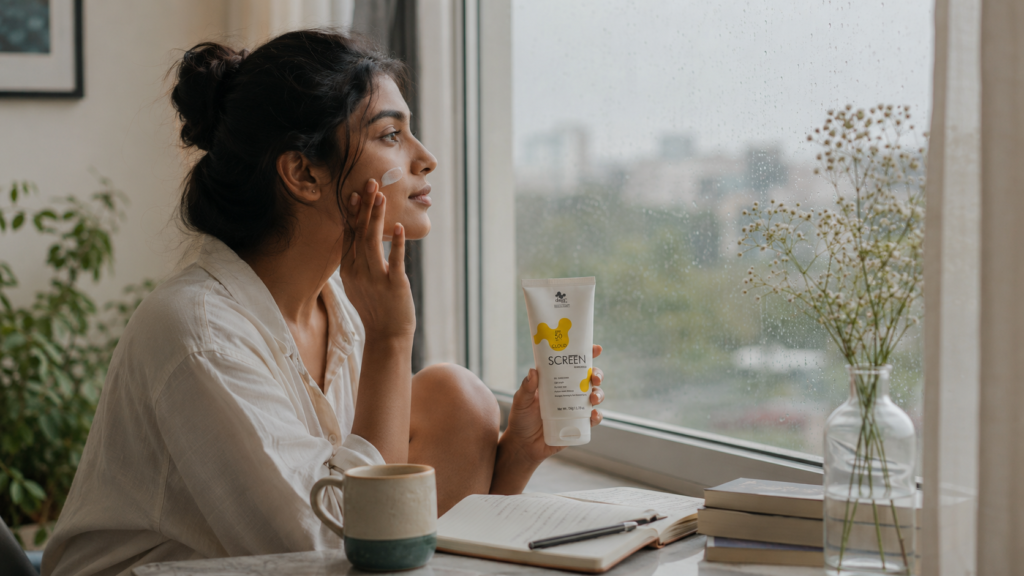

Why You Need Sunscreen in Monsoon & Indoors
There’s a quiet skincare myth that costs Indian skin more than almost any other: “I don’t need sunscreen today, it’s cloudy.” Or worse, “I work indoors, I don’t really need it.” Both are wrong. And both are why so much pigmentation, dullness, and premature ageing creeps up on people who genuinely thought they were being careful.
Here’s what’s actually happening when the sun “isn’t out.”
The monsoon myth
Cloud cover feels like protection. It isn’t.
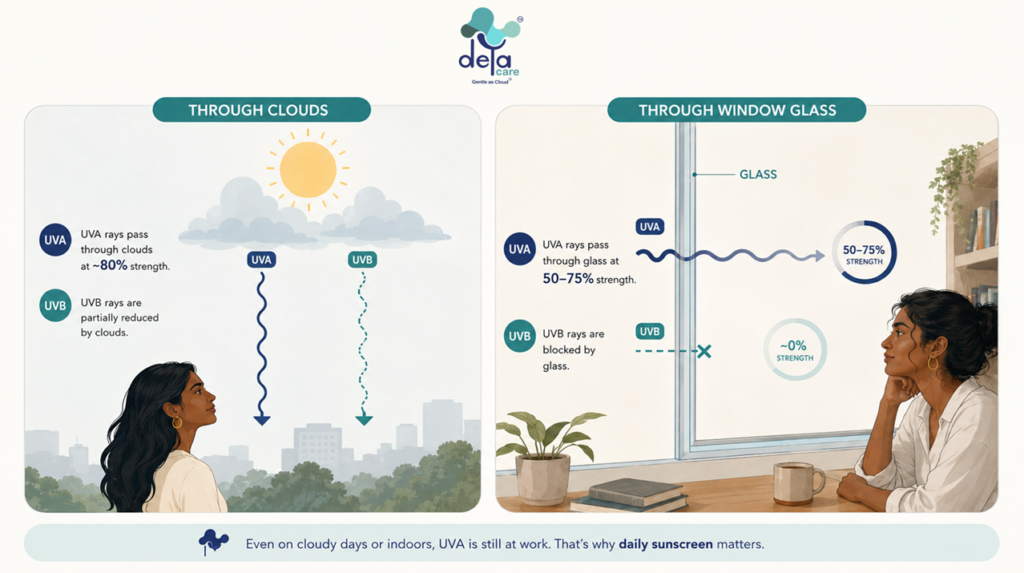
On a typical overcast day, up to 80% of UV rays still reach the ground. UVA — the wavelength that drives pigmentation, melasma, and skin ageing — passes through clouds with almost no resistance. UVB drops a little more, but not enough to make skipping sunscreen safe.
So that grey, drizzly, humid Mumbai afternoon? Your skin is still being hit by enough UVA to add to the year-round pigmentation load. The reason you don’t feel it is that UVB — which causes the warm-and-burning sensation — is partially blocked by clouds. UVA, the silent half, keeps coming through.
In Indian conditions specifically, this is worse than in cooler climates. The UV index across most of the country sits in the high to extreme range for the bulk of the year, including most of the monsoon months. Cloudy doesn’t mean low UV. It just means UV without the heat cue that reminds you to take it seriously.

The indoor myth
The “I work in an office, I’m fine” defence has a similar problem.
Standard window glass blocks most UVB but lets through 50–75% of UVA. A desk by a window, a long car commute, a glass-walled meeting room, the seat by the café window — all of these are quietly ageing your skin even when you can’t feel it.
If you’re sitting in the same spot every day, the exposure isn’t dramatic, but it’s cumulative. Most dermatologists will tell you that the patchy pigmentation many Indian adults notice in their late 20s and 30s — uneven cheeks, a darker forehead, a stubborn shadow above the upper lip — is rarely the result of one beach holiday. It’s the result of years of unnoticed exposure during commutes, work hours, and “I’m just running an errand” moments.
There’s also growing research on visible light from sunlight and high-energy light from screens. The evidence for screen-distance skin damage is still emerging, but visible light from the sun — the kind that pours through your window — is now established as a meaningful contributor to melasma in pigment-prone skin. Mineral and tinted sunscreens in particular help here, because they shield against a wider light spectrum than chemical filters alone.
Why monsoon humidity makes it worse, not better
Humidity isn’t UV protection. It’s a complication.
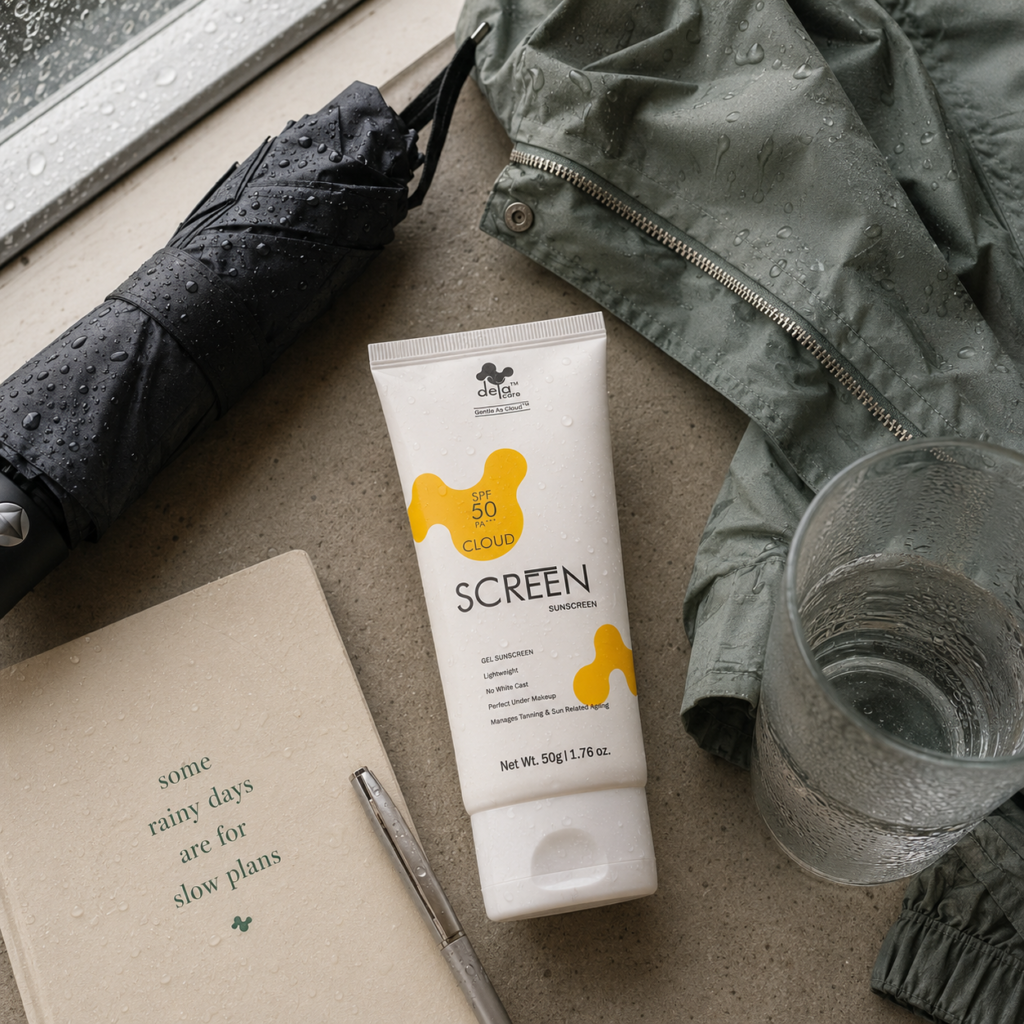
During monsoon and post-monsoon, sweat dilutes sunscreen, the air feels too sticky to want anything on your face, and most of us cut corners. The result is a season where pigmentation drivers are still active but protection is at its weakest.
This is the real reason monsoon skin so often looks dull, congested, and uneven by September. Not “the rains made my skin worse” — but “I stopped wearing sunscreen for three months.”
What this means for your routine
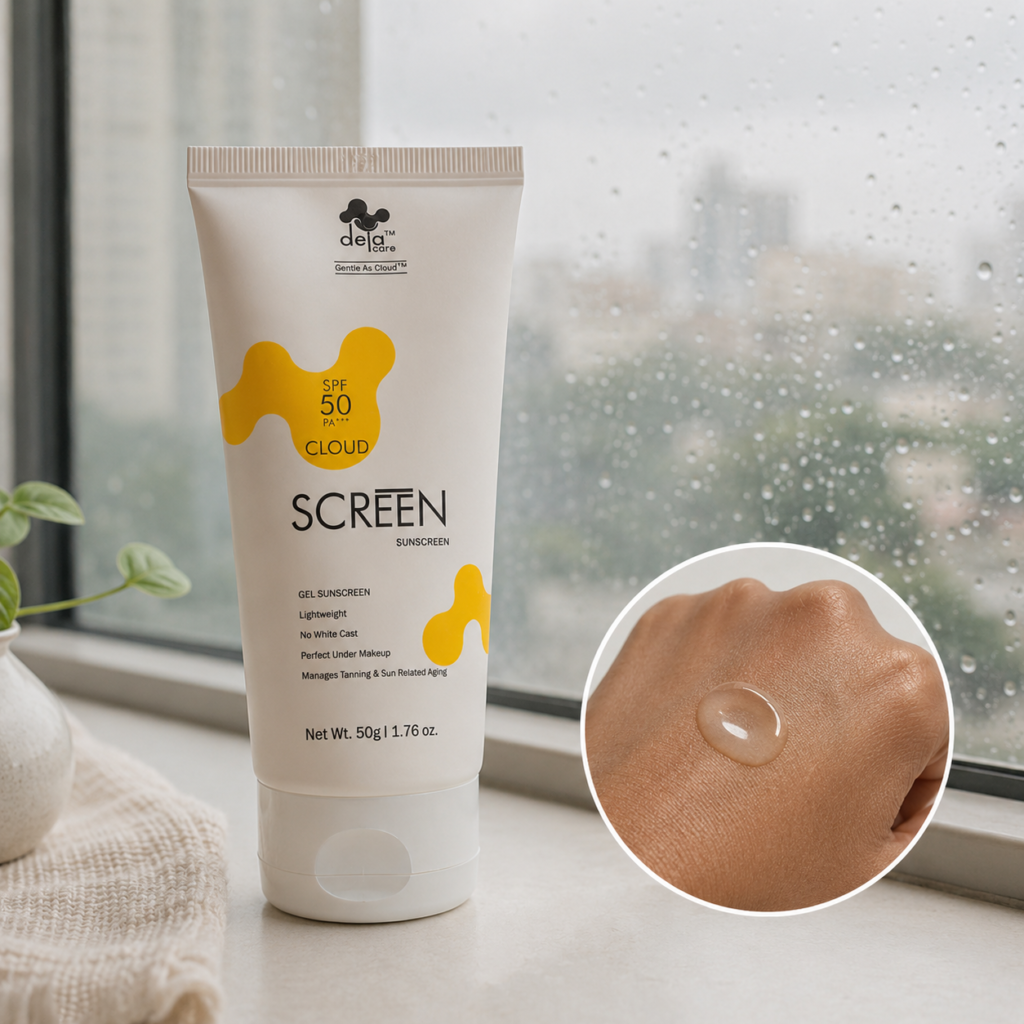
Three things are true at once: UV doesn’t take a monsoon break, indoor UVA exposure is real, and humidity makes sunscreen feel less wearable. The fix is to choose a sunscreen that works with the climate rather than against it. For everyday indoor and overcast wear, Cloud Screen SPF 50 PA+++ is built for it — a lightweight gel with photostable Tinosorb filters that don’t break down under cloud cover or screen exposure, and a hydrating finish that stays comfortable through humid weather.
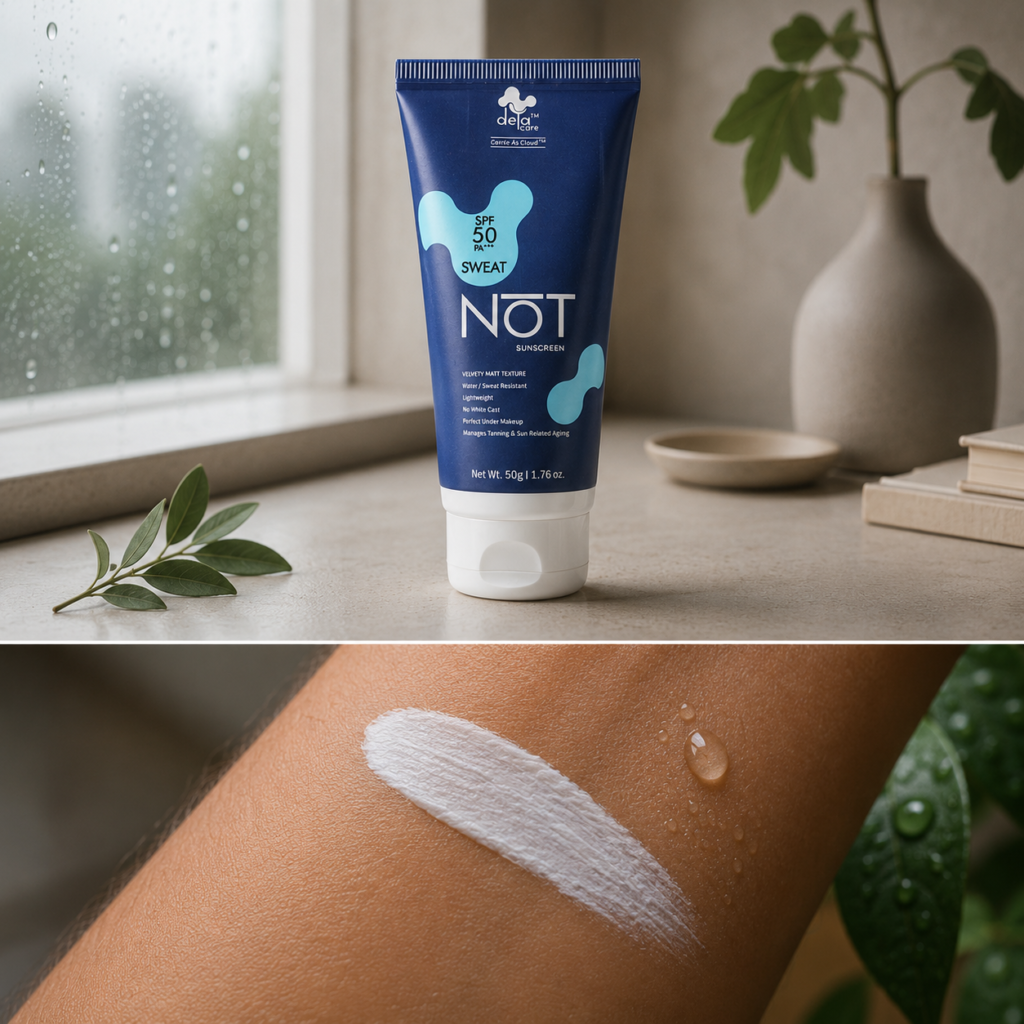
For commute days, outdoor errands in unpredictable monsoon weather, or oily skin that needs the formula to actually stay put, Sweat NOT SPF 50 PA+++ is the matte mineral counterpart — sweat-resistant, shine-controlling, and stable through humidity and rain.
The bottom line
The sunscreen rule for Indian skin isn’t seasonal. UV doesn’t care that the sky is grey, and your office window isn’t the protection you think it is. Wear sunscreen on cloudy days. Wear it on indoor days. Wear it on the days you almost convince yourself you don’t need to. That’s the part that makes the difference, ten years from now.