
It’s the question every skincare-conscious shopper eventually asks: is mineral sunscreen really safer than chemical, or is it just clever marketing? The honest answer is more nuanced than either side will tell you — but for some skin types and some situations, mineral genuinely has the edge.
Here’s what’s actually true.
How they work — and why it matters
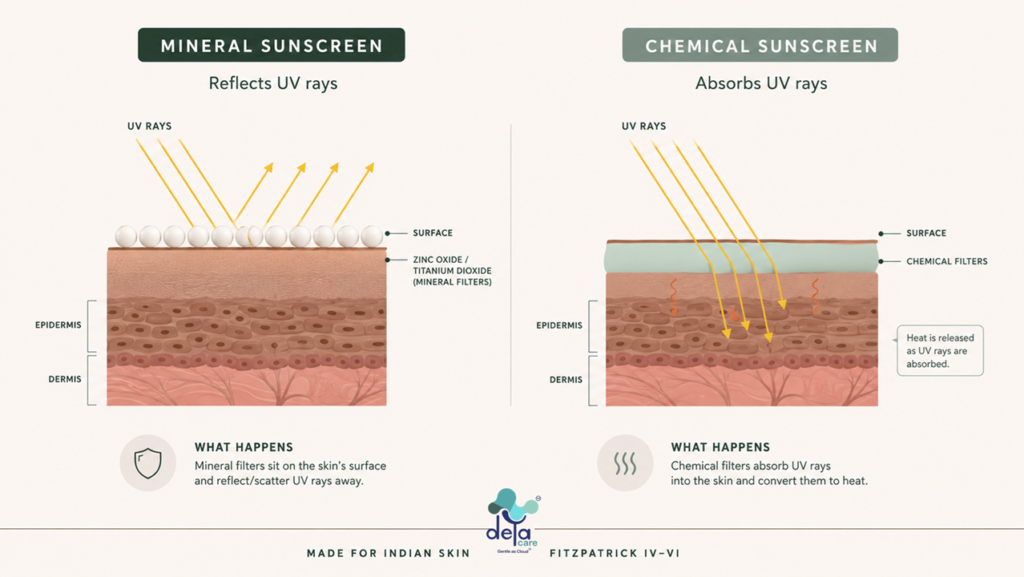
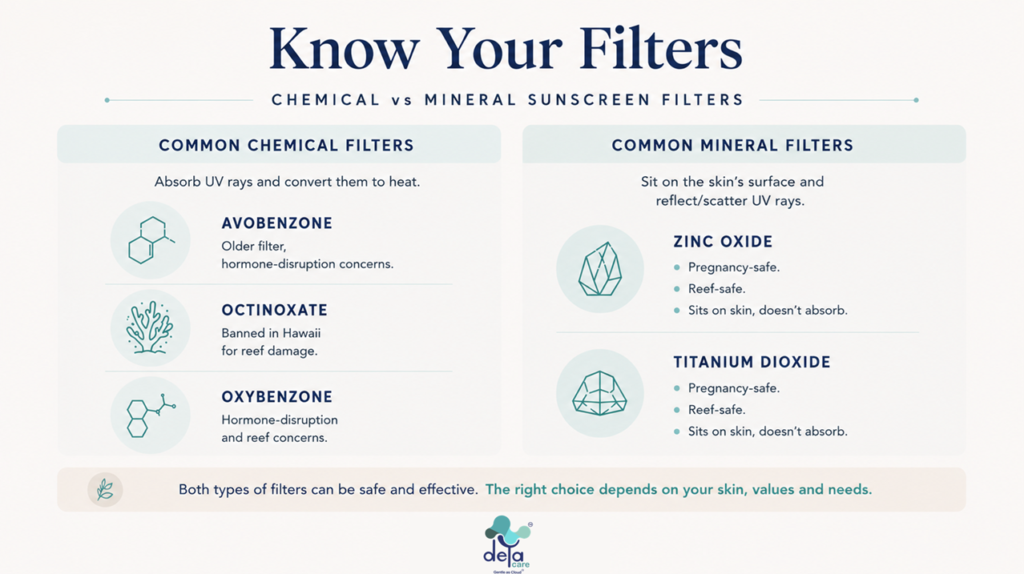
Chemical sunscreens use filters like avobenzone, octinoxate, and oxybenzone that absorb into the skin and convert UV rays into heat, which the skin then releases. They’re light, invisible, and easy to wear.
Mineral sunscreens use zinc oxide and titanium dioxide that sit on the surface of the skin and physically reflect or scatter UV rays before they ever enter. Protection starts the moment you apply.
Same goal, two very different routes.
The safety question, honestly
Most modern sunscreen filters — chemical and mineral — are safe when formulated and applied properly. But a few older chemical filters have raised real concerns:
· Oxybenzone and octinoxate have been linked to hormone disruption in lab studies and are now banned in places like Hawaii and parts of the Caribbean for damaging coral reefs.
· Some chemical filters absorb into the bloodstream — the FDA has called for more long-term safety data on several of them.
· Chemical filters need 15–20 minutes to bind before they protect, and can sting sensitive eyes or trigger reactive skin.
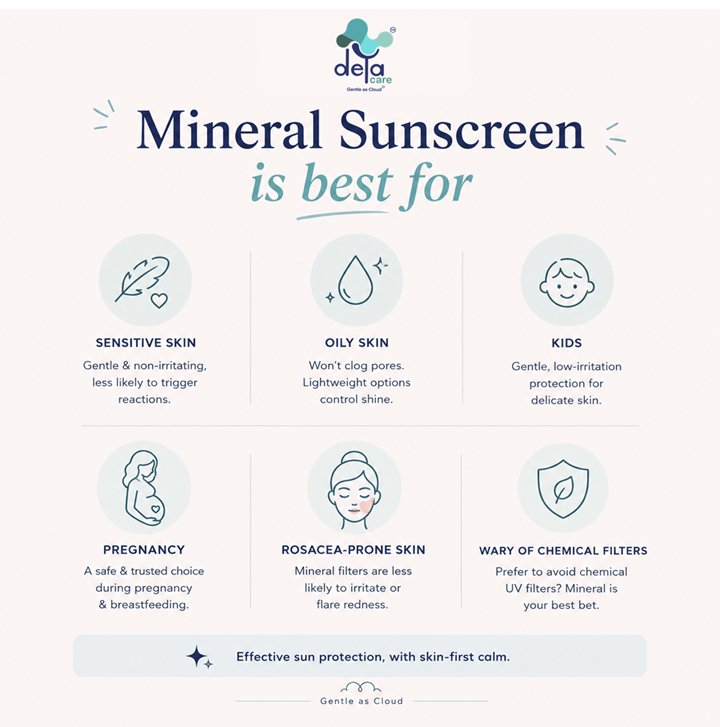
Mineral filters, by comparison, don’t penetrate the skin. They’re considered safe during pregnancy, gentle enough for children and rosacea-prone skin, and reef-safe by default. For sensitive skin, mineral is the conservative choice — and the smarter one.
So why doesn’t everyone use mineral?
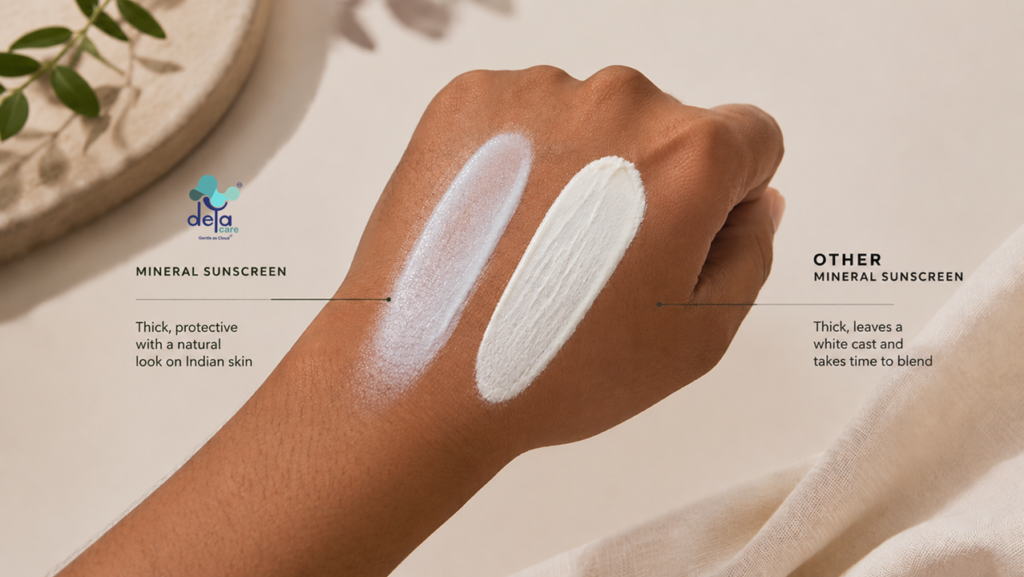
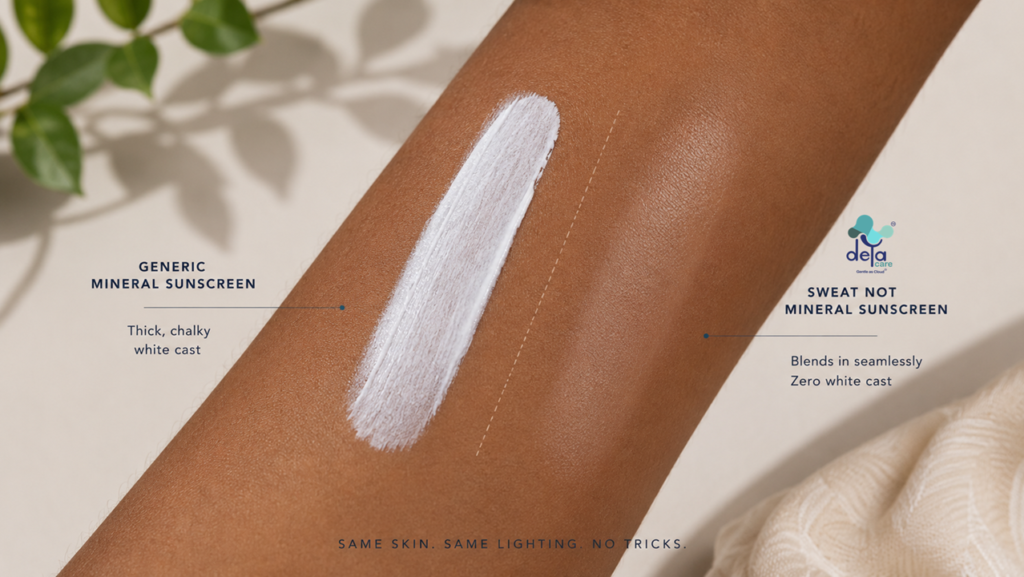
Because traditionally, mineral sunscreens have been a hard sell — thick, chalky, and notorious for leaving a white cast that looks especially harsh on Indian skin tones. They’re heavy in humidity, slide off in sweat, and often feel like wearing a mask.
That’s the gap most mineral formulas still haven’t closed.
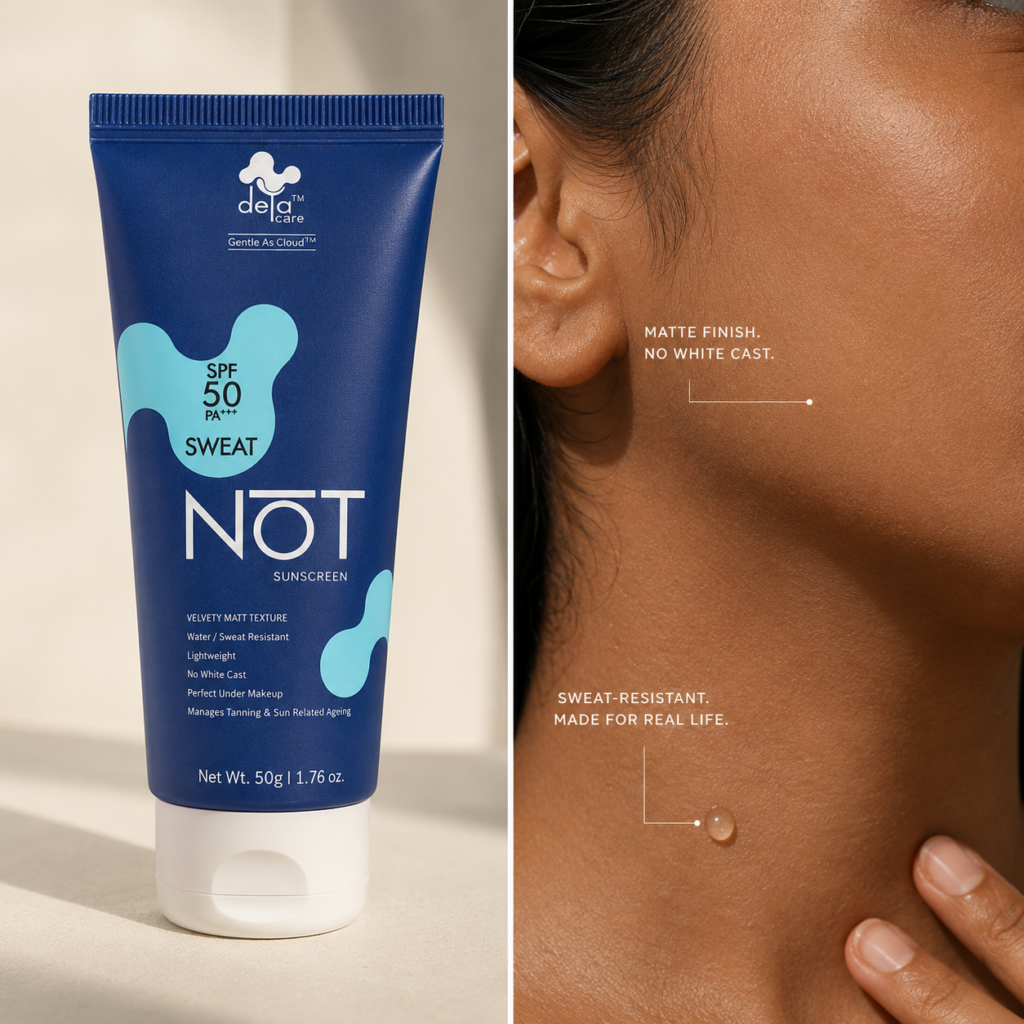
Sweat NOT — mineral done right for Indian skin Sweat NOT SPF 50 PA+++ Ultra Matt Mineral Sunscreen is built around the safety profile of zinc oxide and titanium dioxide, layered with new-age UV filters that solve almost everything the old mineral category got wrong.
What you actually get:
· No white cast on deeper Indian skin tones — the formula blends in cleanly instead of sitting on the surface
· Ultra-matte finish that controls shine through humidity, sweat, and long days outdoors
· Sweat-resistant hold that doesn’t slide into your eyes mid-commute or mid-workout
· Free of oxybenzone, dermatologically tested, gentle enough for sensitive skin
· Broad-spectrum SPF 50 PA+++ — full UVA and UVB defence, not just sunburn protection
Most mineral sunscreens force a trade-off: safety in exchange for a chalky, heavy finish. Sweat NOT removes the trade-off. You get the gentleness and reef-safe profile of a mineral formula with the wearability of a modern hybrid — which means it actually gets reapplied. And reapplication is the part that decides whether your sunscreen really works.
The bottom line
For sensitive skin, oily skin, kids, pregnancy, or anyone wary of chemical filters, mineral is the safer default. The old objections — chalky finish, white cast, sliding off in heat — were real, but they’re no longer inevitable. Sweat NOT is what mineral sunscreen looks like once it’s actually built for Indian skin and Indian weather.